
The field of NNT (Nuclear NanoTechnology) has gained increasing importance in the last years. One of the latest research projects concerning nanotechnology applications in nuclear sciences that has captured our interest is the EU-funded NASCAR project. The research group focused on new Nano Scintillator Arrays for neutrons detection, which was engineered with the original purpose of preventing nuclear terrorism.
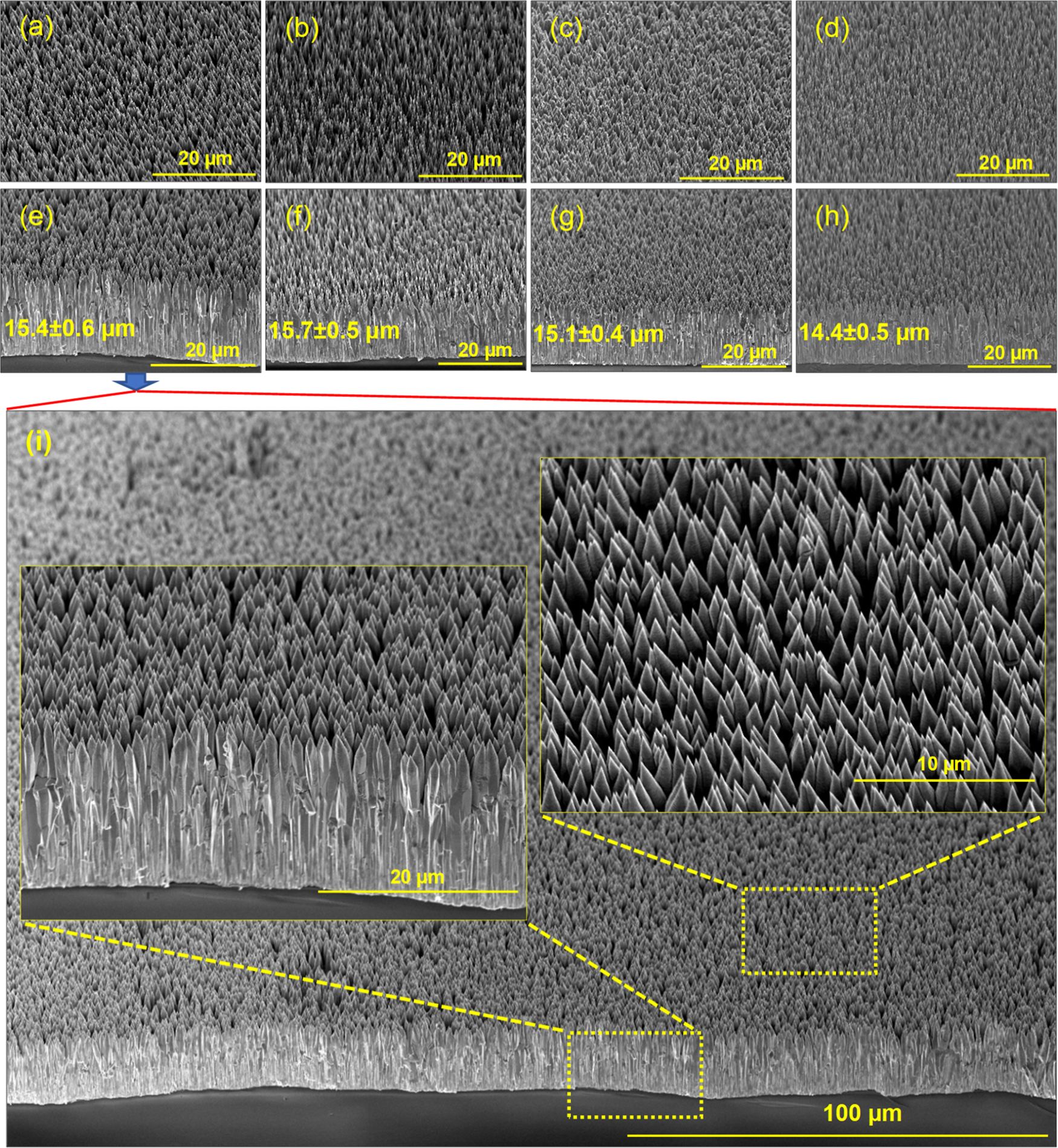
The researchers turned to ZnO (zinc oxide) nanorods doped with Lithium-6 for the realisation of such detector. Zinc Oxide is a semiconductor with a wide band gap, high chemical, mechanical and thermal stability that finds extremely diverse applications, one of which being the ZnO nanostructures and 1D nanorods. The production of such nanostructures is cheaper than using the conventional neutron detectors’ rare and toxic gases. The one-dimensional rods’ structure has been used to guide the light produced by radiation interactions. Indeed, the nanostructure serves as a waveguide, while the Lithium-6 is characterized by strong interaction with low-energy, epithermal or thermal neutrons.
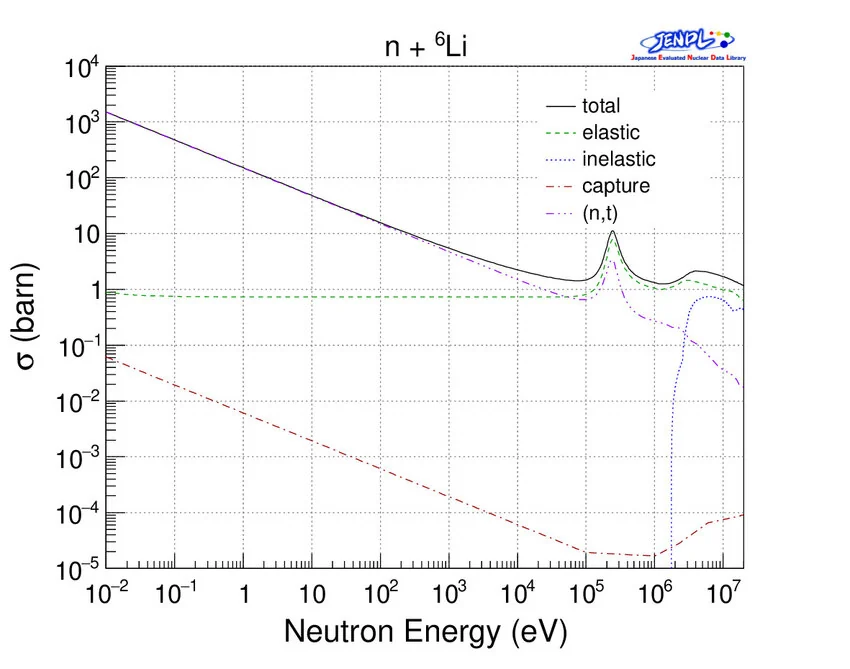
This is due to the high probability of the Lithium-6 and neutron reaction, which is proportional to the corresponding cross-section. As a matter of fact, Lithium-6 is one of few stable odd-odd nuclei (nuclei with an odd number of protons and neutrons), which makes it more reactive towards free neutrons. Moreover, the 1/v Law states that the slower a neutron travels, the greater the probability of interaction. The reaction generates readily detectable charged particles, allowing the instrument to detect and measure neutron fluxes.
The advantages of such detectors with respect to the conventional ones reside in the reduced production costs and the enhancement of scintillation efficiency using ZnO nanorods.
We are aware that this is just a brief treatise on the topic, but if you are curious and would like to know more about it, we suggest looking up the following articles:
CORDIS, cordis.europa.eu. (2025, October 20). NAno SCintillator ARrays (NASCAR) as a novel nuclear detection material. CORDIS | European Commission. https://cordis.europa.eu/project/id/101026555
Jiang, D.Y, Zhao, J.X, Zhao, M., Liang, Q.C, Gao, S., Qin, J.M, Zhao, Y.J, & Li, A. (2012). Optical waveguide based on ZnO nanowires prepared by a thermal evaporation process. Journal of Alloys and Compounds, 532, 31–33. https://doi.org/10.1016/j.jallcom.2012.03.114
Jansson, K., Al-Adili, A., Bevilacqua, R., Gustavsson, C., Hambsch, F.-J., Pomp, S., & Vidali, M. (2017). Measurement of the 6Li(n,α)t neutron standard cross-section at the GELINA facility. EPJ Web of Conferences, 146, 11047. https://doi.org/10.1051/epjconf/201714611047