
An overview of TRISO nuclear fuel: a possible fuel candidate for future nuclear reactors?
 http://gen-iv.ne.doe.gov/GENIVintl-collaboration.asp
When talking about nanotechnologies and nuclear sciences, nuclear fuels and their development is one of the main research fields. In the last years, the uprising of Gen IV nuclear reactors has pushed researchers to explore innovative nuclear fuels. This has led to the rediscovery of TRISO, a micro-particle nuclear fuel developed in the 1960’s, which has regained researchers’ attention as a potential candidate for new nuclear reactors.
What is TRISO fuel?
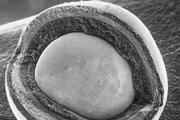
The acronym TRISO stands for TRi-structural ISOtropic. TRISO nuclear fuel is composed of a fissile spherical kernel surrounded by four ceramic layers. Typically, TRISO particles’ structure results of five concentric layers. The inner spherical kernel contains the nuclear fuel, usually as an oxide (e.g. UO2), carbide or oxycarbide. The outer ceramic layers consist of a porous carbon buffer (to attenuate recoiling fission products), inner and outer pyrolytic carbon layers (PyC) for structural integrity and an intermediate silicon carbide region (SiC) with high-temperature creep resistance and stiffness.

The use of such fuel was very popular in the last century due to its thermal and mechanical properties. It could resist temperatures up to 1600 °C and each particle had its own layers acting as containment barrier. However, a series of factors led to the dominance of light-water reactors (LWR). First, the high production costs and the difficulty in fuel change inside the reactors. Moreover, each fuel particle had less uranium per volume compared to conventional fuel. Last, but not least, despite the materials’ properties described above, the particles could still be subject to pressure induced failures due to internal gas buildup.
Why are we talking about TRISO?
New generation reactors, in need of a fuel candidate resistant to high temperatures, have turned their attention to TRISO particles. To solve the problems with this type of fuel, nanotechnology has played a crucial role in testing and enhancing the performance of the TRISO particles’ layers.
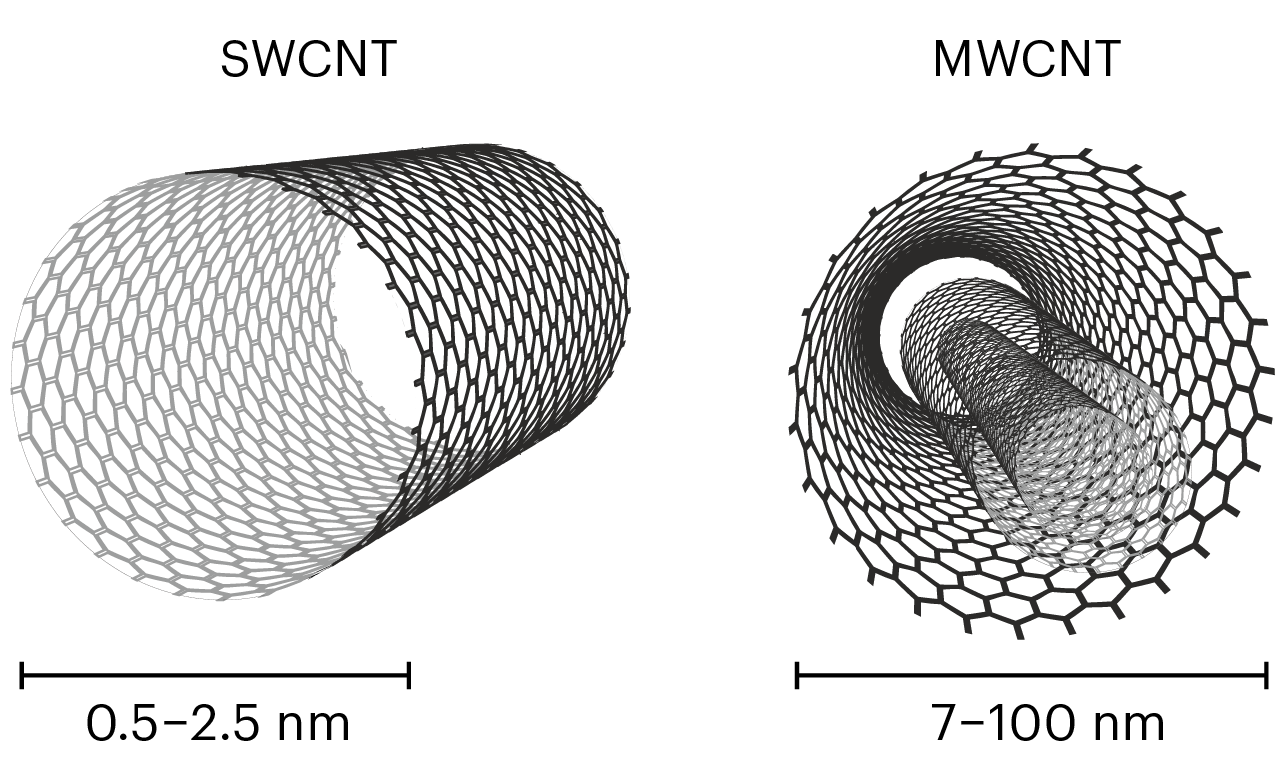
In the last years, research focused on solving TRISO particles’ failure due to internal pressure through the embedding of a multi-wall carbon nanotube (MWCNT) into an inner porous buffer of PyC. The layer is realised through specially designed chemical vapor deposition (CVD), a widely used chemical process consisting in the reaction/decomposition of volatile chemical substances on a substrate. This allows to enhance the kernel’s coating adsorption capacity, reduce chemical attacks from some of the fission products and reduce “amoeba effect” (which consists of the kernel migration due to a temperature gradient inside the particle, resulting in chemical and mechanical damage to the SiC layer).
To enhance the mechanical properties of TRISO nuclear fuel particles’ coating layer, other researchers have tried to develop nanocomposite architectures of SiC and PyC layers using CVD. Another method was to introduce sacrificial nanoscale silicon in low density carbon to reduce chemical damage to the outer layer (the silicon reacts with Palladium produced by the kernel). Other studies have tried to substitute the outer PyC layer with niobium (Nb). This choice derives from good mechanical and thermal conductivity of Nb, which would make heat transport from the kernel to the coolant more efficient.
Therefore, nanoscale engineering is playing a great part in the development and testing of new nuclear fuel candidates for nuclear reactors and the research in this sector is still open.
As always, we thank you for your time in reading this article. We know this is just a brief text on the topic, but if you are interested you can check out the following articles.
Powers, J. J., & Wirth, B. D. (2010). A review of TRISO fuel performance models. Journal of Nuclear Materials, 405(1), 74–82. https://doi.org/10.1016/j.jnucmat.2010.07.030
Rao, P.T, Prakash, J., Alexander, R., Amit, K., Bahadur, J., Sen, D., & Dasgupta, K. (2020). Innovative design and fabrication of generation IV nuclear fuel embedded with carbon nanotube. Ceramics International, 46(10, Part A), 14591–14596. https://doi.org/10.1016/j.ceramint.2020.02.259
Savage, N. (2026). Smaller reactors bring nuclear power closer to fulfilling its promise. Nature, 656(8129), S2–S4. https://doi.org/10.1038/d41586-026-02506-4
Tonks, M. R., Andersson, D. A., & Aitkaliyeva, A. (2026). Computational design of materials for nuclear reactors. Npj Computational Materials, 12(1), 106. https://doi.org/10.1038/s41524-026-01980-8